

Cracking the German Grocery Code: Why I Learned to Love the Nutri-Score
From supermarket anxiety to confident choices: Navigating food labels as an expat in Deutschland.

👋 Welcome to a ✨free edition✨ of Kulturshift. Every week, I decode the quirks of life in Germany 🇩🇪 to help you move from confusion to connection. If this story resonates with you, consider subscribing to support my work and follow Sourav Dey for more honest expat insights. 🥨
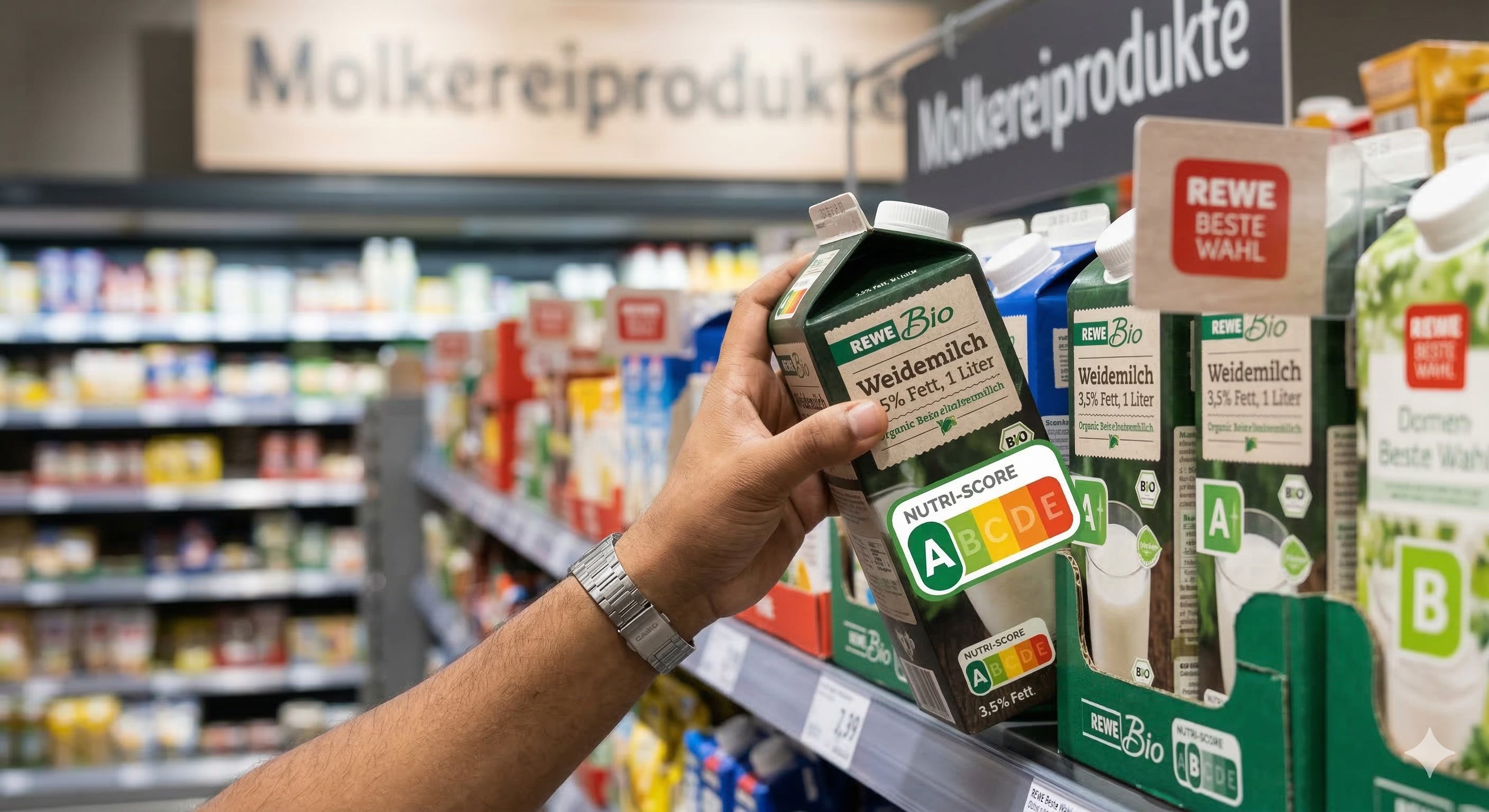
When I first spotted those bright, color-coded A-to-E labels on packages in my local Rewe, I honestly thought it was some sort of classification designed for the German Kita framework. Perhaps an ‘A’ meant it was safe for toddlers, and ‘E’ meant it was strictly for the brave parents of teenagers?
As it turns out, it’s actually a nutritional grading system. And as an expat trying to feed my family well in a new country, it has completely changed how I shop.
The Supermarket Struggle
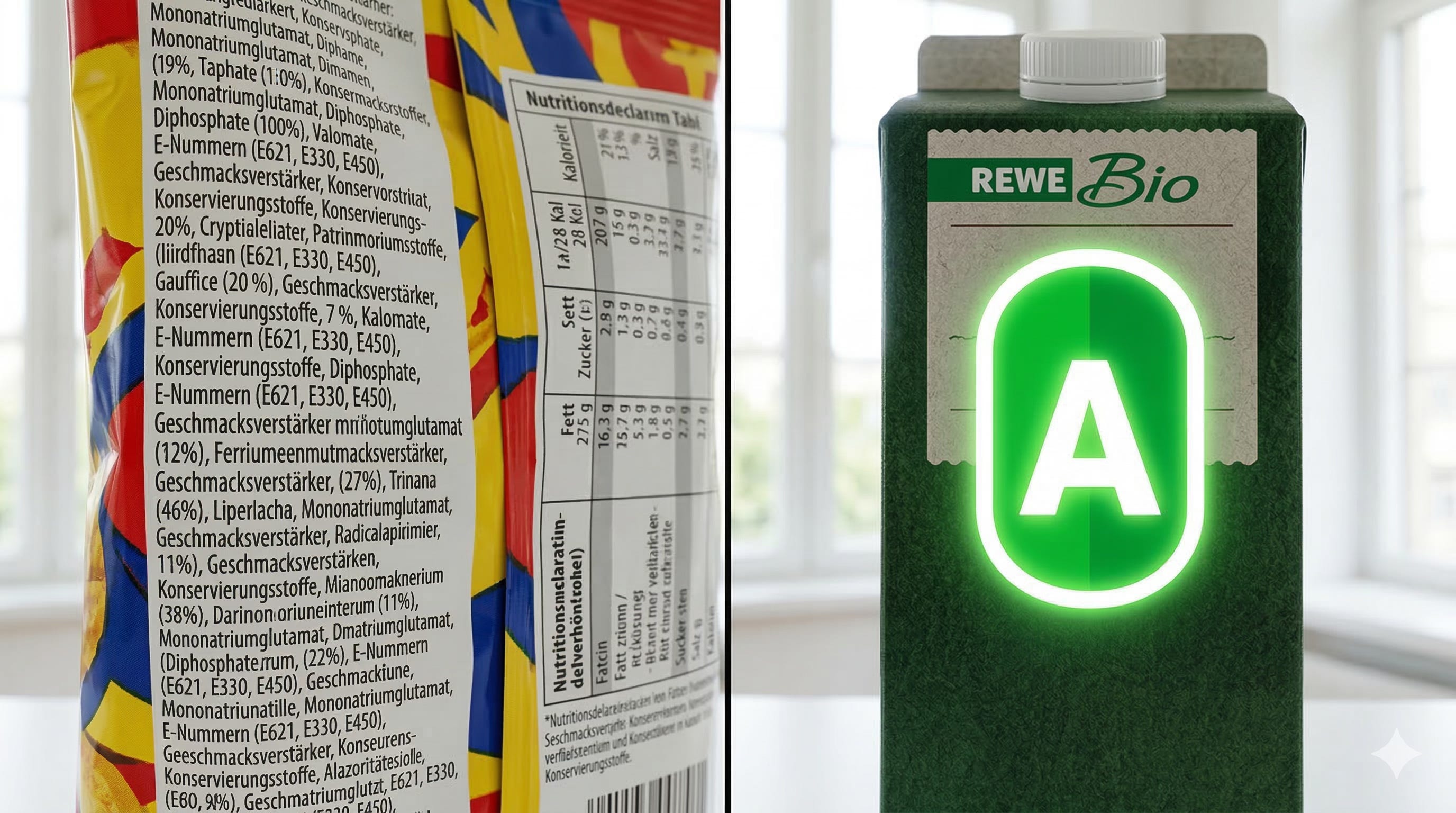
Back in India, my quest to live a healthy lifestyle often felt like a part-time job. I genuinely believe the old adage that “you are what you eat,” but acting on that belief was exhausting. I remember standing in bustling grocery aisles, squinting at the tiny text on the back of snack packets. Trying to decipher the cryptic percentages and unpronounceable additives made me feel less like a shopper and more like a food engineer. Most of the time, figuring out if a product was actually good for me was just guesswork disguised as reading.
While the move to Germany came with plenty of bureaucratic headaches, to my surprise, grocery shopping quickly became much simpler with one key difference: the Nutri-Score.
Speaking of complicated paperwork... did you ever receive a yellow envolpe?

How Color-Coding Brought Peace to Our Pantry
If you haven’t paid attention to it yet, the Nutri-Score is a voluntary, five-letter, color-coded label you’ll see on food packaging here. Ranging from a dark green ‘A’ to a bright red ‘E’, it is designed to help consumers compare nutritional quality at a mere glance.
It works by ranking products within the same category. It balances the “good stuff” (like fiber and protein) against the things we should limit (like sugar, salt, and saturated fats).
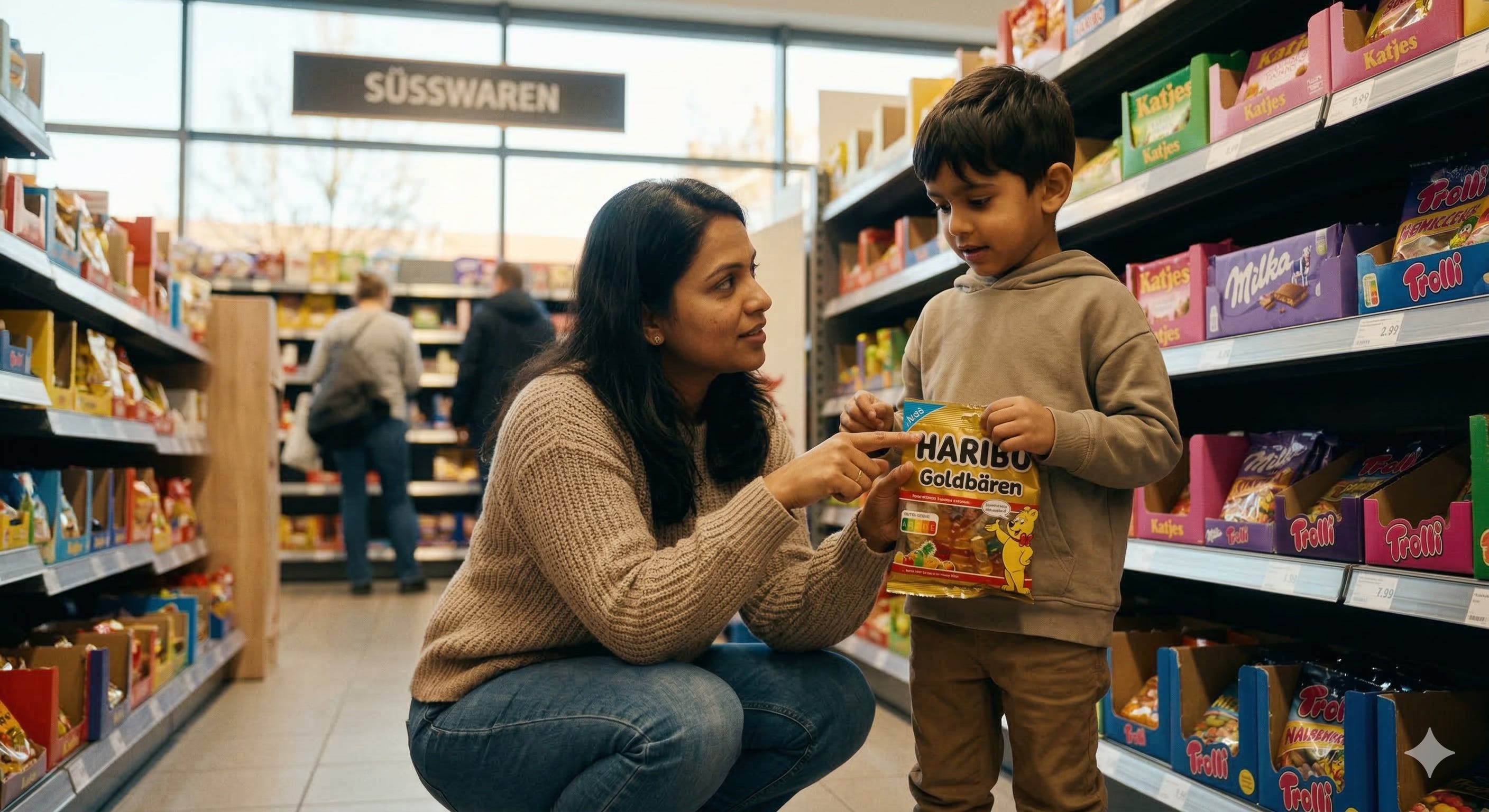
The best part? It’s completely intuitive. When my son grabs a brightly colored bag of Kinder Schoko-Bons or Hanutawafers and begs me to buy it, I don’t have to launch into a lecture about high-fructose corn syrup. I just point to the red ‘E’ on the box. Even at his age, he intuitively understands the traffic-light colors. It turns an argument into a simple visual boundary.
The Cultural Appeal of Ordnung in Food
It’s no surprise to me that the Nutri-Score is incredibly popular here, with about 89% of Germans favoring it. This points to a deep cultural desire for clear, simplified, and honest information.
Germany is a country that values Ordnung (order) and straightforwardness. Why should food be any different?
The cultural consensus here is clear: you shouldn’t need a PhD in food science just to know what you are putting into your body. The Nutri-Score takes the chaos of nutritional science and distills it into an efficient, logical system.
Fascinated by the German cultural resilience? You’ll definitely relate to my breakdown of the WWII history leading to today’s evacuations.

A Guide, Not a Gospel
Now, is the Nutri-Score perfect? Can you trust it blindly? Mostly, no.
It’s important to know its blind spots. The algorithm doesn’t account for essential vitamins, controversial additives, or the level of food processing. Because of this, a highly processed frozen Dr. Oetker Ristorante Pizza might score surprisingly well, while a nutrient-dense bottle of organic Leinöl (flaxseed oil) might score lower simply because it is 100% fat.
Once I mastered the Nutri-Score, I realized I still didn’t understand long, complex German additive names like Geschmacksverstärker (flavor enhancers). That led me to my “next level” expat hack: the Yuka app. I now use the Nutri-Score as my quick-glance baseline in the aisle, and I scan barcodes with Yuka when I want a deeper dive into the actual ingredients.
But let’s be completely honest: I don’t always follow the rules. While I love filling my cart with green ‘A’s, there are days when the bright red ‘E’ on a Ritter Sport Marzipan chocolate bar stares me down, and I buy it anyway. Because, let’s face it, surviving the long, gray German winters requires chocolate.
Ultimately, finding my footing in a new country meant learning to read a new kind of map. I love the Nutri-Score because it allows me to double down on my family’s health without the stress. It’s a guide for balanced nutrition, not a ban—a little red-label treat in moderation is just part of living well.
Over to you, Kulturshift community! What’s your absolute favorite guilty-pleasure ‘E’-rated German snack? (As you can tell, mine is definitely Ritter Sport—or maybe a big bag of Paprika chips!). Let me know in the comments below, no judgment here!